Shein Make America High Again Crop Tee
L ast year, Julia Male monarch, a 20-year-former art educatee and influencer from Texas, noticed that a detail kind of sweater belong was taking over the cyberspace. Celebrities including Bella Hadid had been photographed wearing shrunken, argyle-patterned styles, channelling classic 1990s movies like Clueless during a wave of millennium-era nostalgia. Presently, Male monarch plant the perfect instance in a secondhand store: a kid-sized pink-and-red knitted vest that fit tightly and cropped on an adult. Using herself as a model, Rex paired information technology with jeans and a Dior handbag, snapped a picture, and listed information technology for $22 on Depop, an eBay-like resellers' app favoured by gen Z.
The vest sold instantly, and she quickly forgot almost it. But a month or so after, King received a bulletin from one of her Instagram followers. They alerted her to the fact that an obscure, now defunct Chinese shopping site called Preguy was using her photo to sell its own inexpensive reproduction of the austerity-shop belong. "Seeing the pictures of me up on some random fast-fashion website I'd never heard of before fabricated me actually upset," King said.
Replicas of the vest before long began popping upwards on endless other vesture sites and due east-commerce marketplaces, including Amazon, AliExpress, Walmart and Shein. Over time, the epitome of Male monarch'southward trunk would be contradistinct, warping her trunk shape; at one signal, another person's manicured manus was awkwardly Photoshopped on to it.
Get the Guardian's award-winning long reads sent direct to you lot every Saturday morning
Eventually, retailers began using their own product photos, but that didn't make the experience any less surreal. Unknown brands with names such as GadgetVLot and Weania marketed their versions of the belong with jumbled strings of keywords: "Autumn Preppy Style Streetwear Clothes," "Plaid Cotton Knitted Vest Rubberband V-neck Sweater Crop."
A belong that had started as a 1-off vintage find was now available for anyone to buy, and frequently for an even lower price. As with many way trends, it had been plucked from social media and dropped into the frenzied machine of the global e-commerce marketplace. It was multiplying, virtually of its own accordance, in the factories of China'due south swelling ultra-fast-manner industry.
Over the by decade, thousands of Chinese clothing manufacturers have begun selling directly to international consumers online, bypassing retailers that traditionally sourced their products from the country. Equipped with English language-language social media profiles, Amazon seller accounts, and admission to nimble garment supply chains, they take fuelled the acceleration of trends and flooded closets everywhere with a moving ridge of impossibly inexpensive apparel.
Residual of Globe, a non-turn a profit, tech-focused journalism outlet based in New York, spent six months investigating this new ecosystem, speaking with manufacturers, collecting social media and production information, making test buys and interviewing shoppers and industry experts in China and the Us. The results of that reporting reveal how Chinese clothes makers have evolved to cater to the desires of cyberspace-native consumers – and transformed their consumption habits in the process. Capitalising on this shift are companies such as Shein: the most successful, well-known and well-funded online retailer of its kind.
S hein is at present one of the world's largest fashion companies, but trivial is known nearly its origins. Information technology was founded in 2012 nether the name SheInside, and reportedly began by selling wedding dresses abroad from its get-go headquarters in the Chinese urban center of Nanjing. (A spokesperson for Shein denied it ever sold wedding dresses, but declined to specify other details most its history.) The company says its founder, Chris Xu, was built-in in People's republic of china, though a since-deleted press release described him as being from the United states. Shein eventually expanded to offering apparel for women, men and children, every bit well as everything from dwelling goods to pet supplies, only its core business remains selling dress targeted at women in their teens and 20s – a generation who grew up exploring their personal fashion on platforms like Instagram and Pinterest.
Shein's clothes aren't intended for Chinese customers, but are destined for export. In May, the visitor became the most popular shopping app in the US on Android and iOS, and, the same month, topped the iOS rankings in more than fifty other countries. It'south the second-most pop fashion website in the world after Macys.com.
Past 2020, Shein's sales had risen to $10bn (£7.5bn), a 250% jump from the twelvemonth before, according to Bloomberg. In June, the company deemed for 28% of all fast-fashion sales in the U.s. – almost as much every bit H&M and Zara combined. The same calendar month, a report circulated that Shein was worth more $47bn, making it i of the tech industry's about valuable individual startups. (Shein declined to say whether the sales or valuation figures were accurate.)
Shein's fast growth has brought with information technology a series of controversies. Numerous designers accused it of stealing their work, and brands including Levi Strauss and Dr Martens have sued the company for trademark infringement. (The former settled for an undisclosed sum, and Shein said it doesn't comment on ongoing litigation). It was too pilloried for selling culturally or historically offensive products, such as swastika necklaces. Most notably, advocacy groups and journalists accept uncovered evidence that Shein's $11 bikinis and $vii crop tops were beingness made past people working under cruel conditions, while environmental experts warned that those aforementioned items were often only beingness worn once before getting thrown away.
At the heart of these issues is Shein's aggressive business model. Comparisons to fast-fashion giants such as H&M miss the indicate: information technology'south more than like Amazon, operating a sprawling online market that brings together about 6,000 Chinese clothing factories. It unites them with proprietary internal direction software that collects near-instant feedback about which items are hits or misses, which allows Shein to order new inventory virtually on demand. Designs are deputed through the software – some original, others picked from the factories' existing products. A polished advertising operation is layered over the pinnacle, run from Shein'south head offices in Guangzhou.
Through its manufacturing partners on the ground in Prc, Shein churns out and tests thousands of different items simultaneously. Between July and December of 2021, it added anywhere between 2,000 and 10,000 individual styles to its app each day, according to data collected in the course of Remainder of World's investigations. The company confirmed that it starts by ordering a pocket-sized batch of each garment, often a few dozen pieces, and then waits to see how buyers respond. If the cropped sweater vest is a hit, Shein orders more. It calls the organisation a "large-calibration automated exam and re-order (LATR) model".
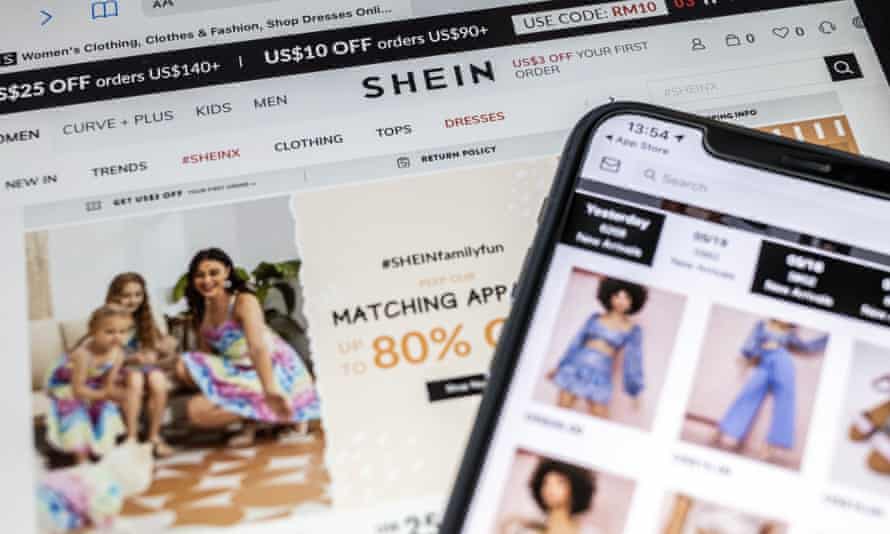
"Fast fashion is well known for its very frequent replenishment of products," said Sheng Lu, a professor at the University of Delaware studying the global material and apparel industry. "But Shein is totally different." From January to October of 2021, Lu'southward research found the company offered more than 20 times every bit many new items every bit Zara and H&Thou.
Amazon's activeness in Cathay may have inadvertently contributed to Shein'south success. Starting around 2013, the e-commerce behemothic began aggressively recruiting manufacturers in the state to sell cheap products abroad on its third-political party marketplace. As Chinese sellers joined the platform, western consumers were flooded with thousands of new brands selling bones goods, from kitchen supplies to electronics chargers, under unfamiliar names like Nertpow, Fretree and BSTOEM.
Amazon gave these factories the enormous opportunity to cut out western middlemen and begin learning about the tastes of American shoppers. In turn, Amazon was able to undercut the prices of its competitors, and by 2020, 40% of its third-political party sellers were based in Communist china.
But the partnership betwixt Amazon and Chinese manufacturers somewhen began to sour. Customer complaints about counterfeits and dangerous products from China were putting a dent in the tech visitor'south reputation, and this September, Amazon banned hundreds of Chinese merchants for allegedly using faux product reviews. Many of the sellers weren't entirely happy with Amazon either, which required them to abide past an ever-shifting set of policies, and to pay hefty fees for services such every bit warehousing and order fulfilment.
"This cost is very loftier," said Du Tianchi, the founder of an wearing apparel company in Red china'southward Jiangsu province that sells on Amazon and AliExpress. "Once your Amazon storage is out of stock [in the United states of america], yous accept to replenish it from China, which is time-consuming."
Ascension frustration with Amazon amid Chinese sellers opened a window for Shein, which recruited many of them to supply its own platform. But Shein didn't but try to compete with Amazon: it joined it. The company offers thousands of its own products on Amazon's marketplace, including some that take become bestsellers.
"Amazon whet the palate for online shopping, taught [Americans] how to shop online, and created the habit," said Allison Malmsten, a China marketplace analyst at Daxue Consulting in Hong Kong. "Shein realised that and decided to optimise information technology."
Rather than mimicking Amazon straight, Shein grew by bringing traits of China's gamified e-commerce market to the residual of the world. Online shopping in the country has evolved into a course of entertainment, featuring livestreamers, flash sales and enticing pop-ups that compel consumers to scroll through the newest products. Taobao, a domestic Chinese e-commerce platform owned by Alibaba, helped pioneer interactive features such equally custom product recommendations, and even built a miniature social network into its app. Shein has used similar components on its platform, including a points system that rewards shoppers for making purchases, leaving reviews and playing minigames.
Malmsten said that Shein has learned a lot from the strategies of Chinese e-commerce companies. "Shein brought that manner [of shopping] to the due west, and it really works with Gen Z," she said.
After watching the company'due south rapid rise, major Chinese tech giants and newer startups are now racing to imitate it. The competition includes ByteDance and Alibaba, which are both working on eastward-commerce platforms targeting the same international demographic as Shein. Then there are brands like Cider, a Hong Kong-based eastward-commerce clothing brand backed past the Silicon Valley venture upper-case letter firm Andreessen Horowitz. In a blogpost announcing its investment, the house described Cider as a "marketplace of global factories that makes information technology possible for users to have more selection than Zara, at the price point of Forever 21, on-need".
L in Zhen is a Chinese clothing manufacturer and the head of the largest organisation of Amazon sellers in Fujian, 1 of China'south main garment-producing provinces. He has sold clothing to consumers in Europe and North America direct since 2011, long before they learned to buy everything from mattresses to toothpaste on Instagram. Today, Lin'south wear visitor, Xiamen Ouchengsheng, known every bit OCS, earns nearly $100m in annual overseas sales, he told Rest of Globe. This year, most half came from Amazon, a third from the company's website, and the balance came through AliExpress or selling to other businesses, including Shein.
Lin said Shein originally approached OCS because it was one of the tiptop sellers of dresses on AliExpress, Alibaba'southward due east-commerce platform for markets outside China. Lin said that the company mandated that he produce a sure number of different styles every calendar month, and deliver some in equally piffling equally 10 days. "The requirements are kind of loftier," he said.
Because of the variety of styles that Shein demands, suppliers that already have a range of production capabilities and function "more like factories" have an easier time working with the company, Lin explained.
Lin said he feels positive about what Shein has done for Chinese wearing apparel sellers. The company's ability to persevere through a number of challenges – worsening tensions between the Usa and Communist china, global supply chain slowdowns, and an ongoing pandemic – is a outcome of a "long-term vision" that has included "meticulous supply concatenation management", he said.
The secret is Shein's internal software, which connects its entire business organisation, from design to delivery. "Everything is optimised with big data," Lin said. Each of Shein'due south suppliers gets their own account on the platform. "Y'all can encounter the current sales, and so it volition tell you to stock up more if y'all sell well, and what you need to do if yous don't sell well. It's all in that location."
The software contains uncomplicated design specifications that help manufacturers execute new orders apace. "A big brand might demand a very high-end designer, or a designer with top engineering, and even and then may only exist able to produce twenty or xxx styles a calendar month," said Lin. "But Shein does not accept high blueprint requirements. Information technology is possible that a typical university student could go started designing quickly, and the output could be high."
A spokesperson for Shein declined to say much about the software, but said the visitor invests "heavily in training, technology and IT support to help our suppliers become more efficient and profitable".
For years, European brands such every bit Zara and H&1000 have embodied fast fashion, shortening the route from catwalk to shop window from months to weeks. Merely Shein isn't chasing catwalk trends – rather, it oftentimes knocks off items seen on TikTok and Instagram, where hype cycles motility significantly faster. Whereas Zara typically asks manufacturers to plow effectually minimum orders of 2,000 items in 30 days, Shein asks for as few as 100 products in as fiddling as 10 days. "They desire factories to exist much more nimble," said Lu.
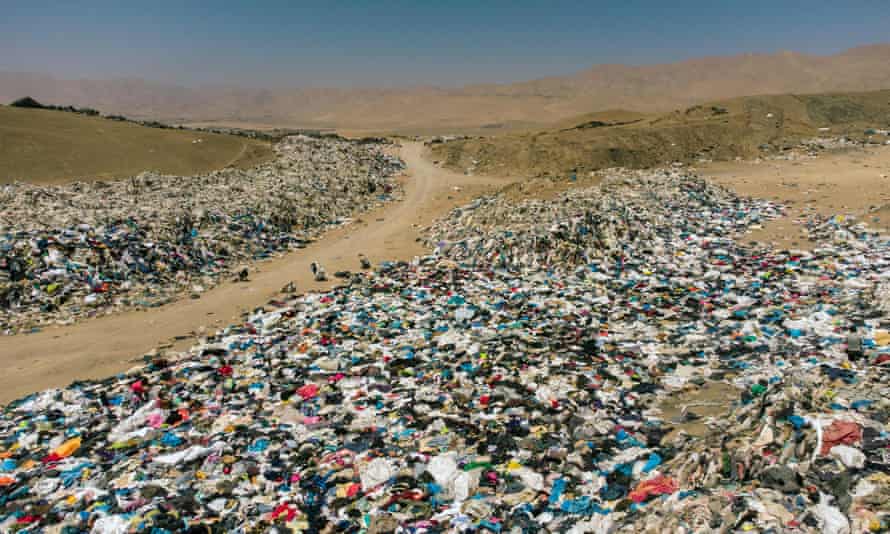
That pressure to produce clothes more than speedily ends up falling on Chinese garment workers, who sew products for Shein during long shifts in poorly regulated workshops, according to reporting by the Chinese media site Sixth Tone. A knitting machine operator at a manufactory in the city of Zhejiang told Rest of World that, in China'south garment sector, working overtime is "a certainty".
"Similar all the manufacturing industries in China, the number of employees working overtime is basically already saturated," said the worker, who asked to remain bearding because they weren't authorised to speak about their job publicly. "It'due south impossible to go to work from nine to 5." (The factory where they work doesn't supply for Shein, just does manufacture clothes for other foreign brands and for auction on AliExpress.)
In emailed comments, Shein said the company takes "all supply concatenation matters seriously and is fully committed to upholding high labour standards". It added that information technology takes "immediate activity" if it identifies that a supplier isn't adhering to its lawmaking of conduct.
Shein's software-driven model allows it to remain at arm's length from the labour forcefulness really making the products on its platform. It tin also avoid direct managing inventory for almost whatever of the products it sells, minimising the amount of goods sitting unbought in warehouses.
To convince suppliers to bring together its system, Shein had to run into only a very bones bar: paying them on time. Receiving timely payments is a huge problem for factories in Mainland china, said Malmsten, the market annotator. "They've congenital a lot of loyalty from their suppliers, so they tin can have more urgency on their orders," she said. The result is that more than lxx% of products on Shein's website were listed less than iii months ago, Malmsten institute, compared with 53% at Zara and 40% at H&M. "Shein just kind of blew Zara out of the water," she said.
T here is a downside to Shein working with so many unlike factories at the same time: like products are popping up all over the internet. Because some suppliers such as Lin sell through multiple channels, consumers take complained on social media about seeing the aforementioned clothes appear on Shein, AliExpress, Amazon and stand-alone e-commerce sites, all at dissimilar prices. The duplicated products are often brandless nuts such as T-shirts, or knockoffs of items from independent labels and major style houses. Since they don't seem sectional or unique, consumers are wary nearly getting duped into paying more than they should.
Communities have sprung up on TikTok, Reddit and Facebook where shoppers share tips most how to discover identical-looking dress for one-half the price, or how to buy a convincing "gull" (a copycat version) of this season'southward hottest designer handbag. Over the summer, when a $xvi crisscross crop top from Amazon went viral, TikTok users began pointing out that it was available for simply $13 on Shein and as low every bit $3.83 on AliExpress.
These forums are the natural upshot of an online shopping ecosystem that has fabricated international consumers more than aware of the Chinese companies making their apparel. Because they know the bulk of what they buy is coming from Prc, many people, understandably, assume that like items originated from the same factories.
While that can be the case, test buys conducted by Rest of World suggested that the truth is more complicated. In September 2021, Rest of World ordered five vesture pieces from different shopping sites (Cider, Shein, Amazon, Halara and Shop-Pêche), and what looked like imitations of the same products on AliExpress. While the items were ofttimes extremely similar, most weren't carbon copies. This suggests that while some suppliers are offering the same products on multiple websites, clothes factories in China are also extremely adept at mimicking ane another and adapting to the aforementioned trends.
"Many of these companies are leveraging data to forecast what items they should produce," said Lu, from the University of Delaware. "If you use the aforementioned information inputs, and you're using the aforementioned algorithm, peradventure the event is also very similar, if not exactly the same."
"At many of these companies these days – including, I suspect, at Shein – it'due south non the fashion guys that are designing clothing," he said. "It'south engineers. Engineers looking at data."
Amid the examination buys were two sweater vests, both marketed using Julia Male monarch'due south Depop photo: ane from Amazon and one from AliExpress. While synthetic in the same way, the colours were different. In that location were similar differences, subtle only noticeable, between two cherry-print cardigans from Shein and AliExpress. Heart-impress jeans from Cider and AliExpress differed in material and stitching. Only a pair of xanthous platform clogs from Shop-Pêche – a clothing brand with a website proverb it was founded in New York – were indistinguishable from their AliExpress equivalent.
In an surroundings where the competition can rapidly copy your products, a company is set apart by its marketing. Shein has poured significant funds into Google and Facebook advertising campaigns, influencer deals, and even its own social-media reality prove co-hosted by Khloé Kardashian. "They're spending truckloads of coin trying to capture consumers who are searching for products," said Cooper Smith, an e-commerce and fashion industry analyst who previously worked equally the head of Amazon intelligence at Gartner.
Shein'south approach appears to be paying off: in August, its website had 150 meg visitors, xl% of whom came via search, according to Similarweb, compared with four% of Zara's. On social media, the company has partnered with endless micro-celebrities, manner bloggers and reality show contestants, who show off deliveries of trendy clothes in "haul" videos posted to TikTok and Instagram. Earlier Shein'southward app was banned by the Indian government terminal year, the company was at one bespeak reportedly working with about 2,000 influencers in that state alone.
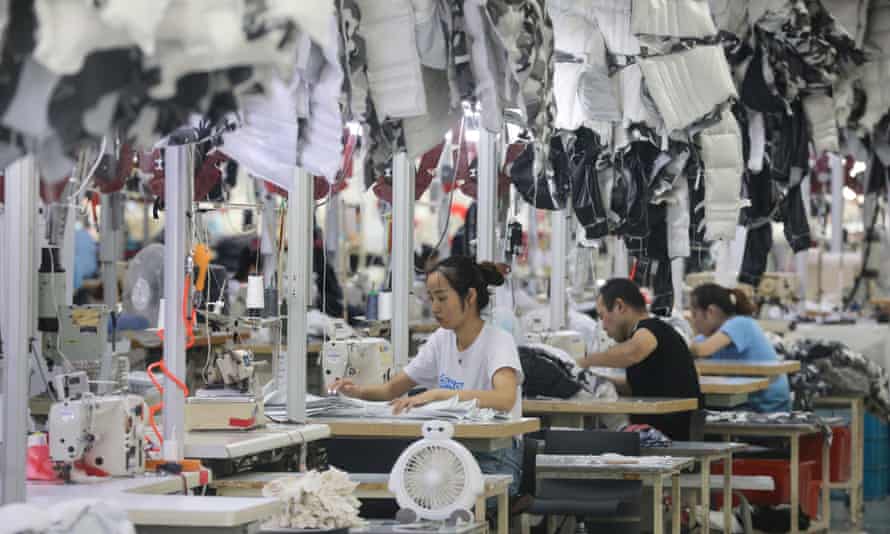
T he Shein model has firmly established a new norm. But alongside that is a question: is it a norm that the clothing manufacture wants? The company has become a poster child for the energy-intensive fast-fashion sector, which has become notorious for making goods with chancy chemicals that rapidly end up in landfills and oceans. In November, Shein appointed a global head of environmental and social governance, and the company told Residuum of World that it has put in identify "water and waste management systems within its supply chain", and is working on an "expanded strategy".
It'southward not clear how long ultra-fast-fashion's environmental affect can be ignored. Several experts expressed concerns almost the model's long-term prospects. "Do we really need more companies like Shein? Is this really an exciting business model to celebrate?" said Lu.
But new and well resourced rivals are watching, and following shut backside. In October, Alibaba – which pioneered the Taobao-style of shopping that Shein originally learned from – launched its own shopping site for Due north America and Europe, called AllyLikes. It appears to be a mirror epitome of Shein, except with far fewer items for auction and a negligible number of reviews.
Rui Ma, founder of the investment consulting house Tech Buzz China and contributing columnist for Residual of Globe, said that Alibaba could leverage its existing e-commerce expertise for the projection, but it's not articulate how much it will exist prioritised. ByteDance, meanwhile, is hiring for dozens of jobs related to international e-commerce, and a crop of other Chinese firms are trying to merits their own slice of the marketplace, as well.
The activity implies that the cycle of ultra-fast-mode will only go on ticking upwardly in speed and volume, every bit long equally consumers go along to willingly buy into micro-trends – and discard them simply as rapidly.
"We're already in this race to the cheapest product, and the number of products just goes up," said Elizabeth Shobert, the director of marketing and digital strategy at the e-commerce analytics firm StyleSage. "I simply keep thinking: where does this terminate?"
This article was first published on Residuum of World.
Source: https://www.theguardian.com/fashion/2021/dec/21/how-shein-beat-amazon-at-its-own-game-and-reinvented-fast-fashion
0 Response to "Shein Make America High Again Crop Tee"
Postar um comentário